
In the automotive industry that pursues precision manufacturing, the issue of burrs has always been a pain point that is difficult to avoid in component processing. The traditional deburring process relies on manual polishing or fixed equipment, which is not only inefficient and costly, but also difficult to meet the precision requirements of complex curved surfaces and deep hole structures. The emergence of floating spindle technology is bringing disruptive breakthroughs to this field.
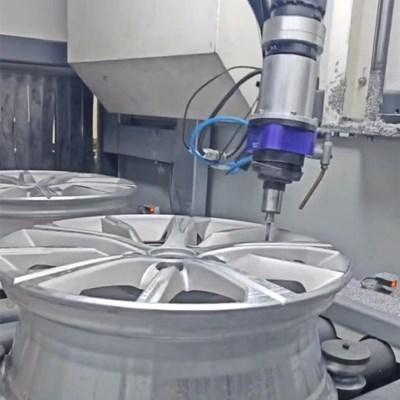
The floating spindle can automatically adjust the angle and force according to the contour of the workpiece through a built-in intelligent compensation mechanism, like a "mechanical finger" that can flexibly move around blind spots such as narrow slits and curved surfaces. Its flexible processing characteristics are perfectly compatible with hard materials such as aluminum magnesium alloy and titanium alloy in automotive parts, avoiding secondary damage while deburring, and improving the surface quality of key components by more than 30%. After a leading car company introduced this technology, the single piece processing time was reduced by 40%, tool wear was reduced by 25%, and the yield rate exceeded 99.2%.
More noteworthy is its intelligent potential - the floating spindle equipped with a visual recognition system can analyze workpiece characteristics in real time and optimize machining paths, providing customized solutions for high-precision parts such as lightweight components of new energy vehicles and transmission gears. This "flexible revolution" led by floating spindles is reshaping the precision boundaries and efficiency laws of automotive parts manufacturing.